Alarm for Employees and Lone Workers
Fast help for employees in industry, production and service – when seconds matter.

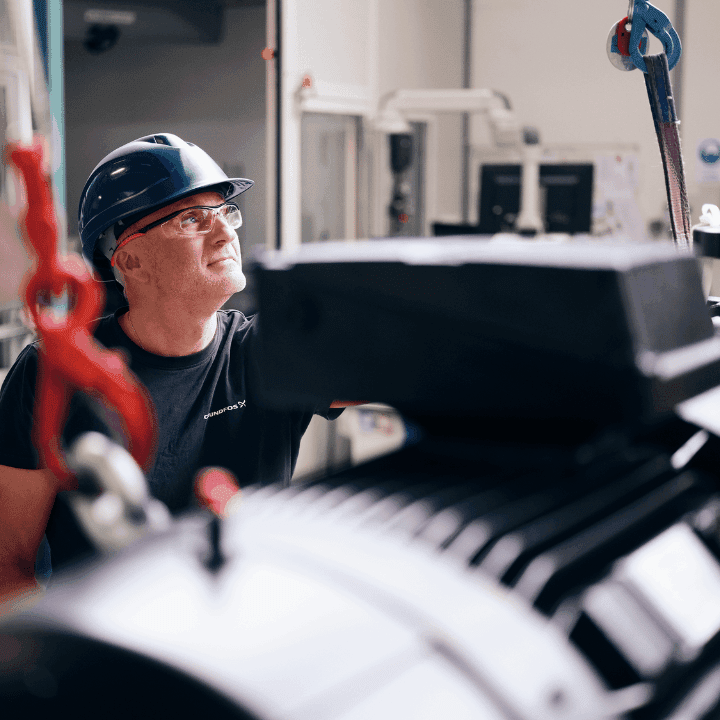
Many people work alone every day – on production floors, in warehouses, on night shifts or at customer sites. When something goes wrong, seconds decide how bad it gets.
Linucare is the dedicated employee alarm used by industrial companies from Grundfos to smaller manufacturers: a physical safety button always within reach that summons help with two presses as standard – including GPS location and alerts to designated colleagues.
What does the law require?
Section 15 of the Danish Working Environment Act requires the employer to ensure that working conditions are fully safe and healthy. For lone working, section 11 of the Danish executive order on the performance of work makes the requirement concrete: if the work involves a particular danger for a person working alone, the work must be organised so that the danger is countered. If the danger cannot be countered, the employee must not work alone. The Danish Working Environment Authority also highlights access to fast and effective help from colleagues where there is a risk of violence.[1][2][3]
The law does not name any specific technology – what matters is that the solution actually counters the danger. A company phone is often in a pocket, in another building or out of reach precisely when it is needed most.
How it works in practice
The employee wears a discreet safety button on a keyring, lanyard or as a wristband. Two presses trigger the alarm (activation can be customised freely in the app) – and help is on the way.
- One press – colleagues alerted: Designated colleagues receive a critical notification that breaks through silent mode – even on night shift.
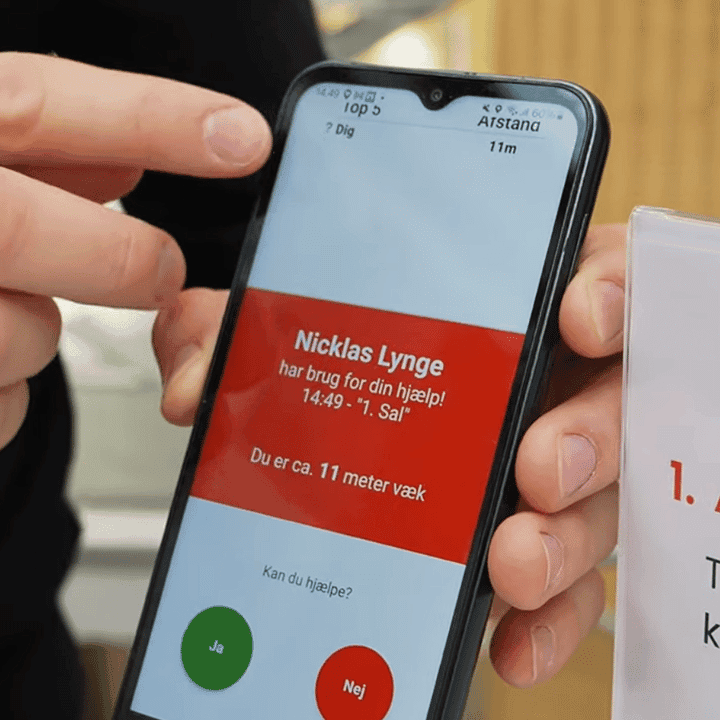
- GPS location shared automatically: The recipient sees the name and exact location and can be navigated straight there.
- Discreet activation, full overview: Silent activation in threatening situations. The app shows who has seen the alarm and agreed to help.
Grundfos uses Linucare on the production floor
Grundfos – one of the world's largest pump manufacturers – runs production around the clock. In selected areas the company uses Linucare as part of its safety setup for employees on evening, night and weekend shifts.
"When you work alone on the production floor, it gives peace of mind to know that help is always one press away. Linucare is so simple that every employee can use it – even those who are not used to technology."
"As a safety representative it matters to me that our solution doesn't just look good on paper but works in real situations. Linucare helps us meet our duty of care to our employees."
– C. Ramesh Kannan, Safety Representative, Grundfos.

Where does it fit?
- Production and industry: Evening and night shifts, machine halls, areas far from colleagues.
- Food and feed: Mixing halls, cold storage and silo areas with lone work.
- Field service and technicians: Technicians alone at customer sites, evenings and weekends.
- Warehouse, logistics and security: Night rounds, large halls, third-party risk.
[1] The Danish Working Environment Act, section 15 – consolidated act no. 1108 of 15 September 2025, Retsinformation, retsinformation.dk
[2] Danish executive order on the performance of work, section 11 on lone working – order no. 1839 of 14 December 2023, Retsinformation, retsinformation.dk
[3] Danish Working Environment Authority, guidance on working with people who may react violently, the section on lone working (in Danish), at.dk
Book a 20-minute demo meeting
Want to see how Linucare can protect your employees – and how the solution can support your health and safety work? We review your specific situation and demonstrate the safety button in practice.
You can book a no-obligation meeting directly in the calendar below, or contact us for a quote tailored to your company.